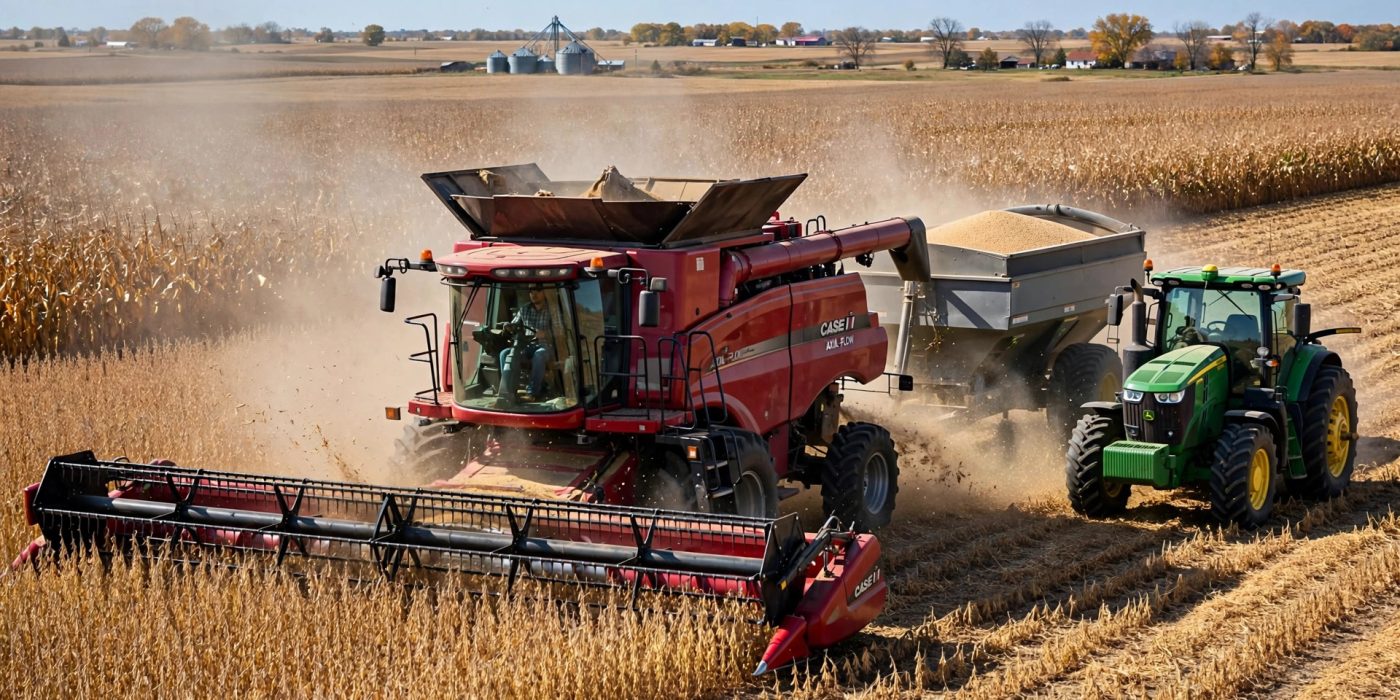
Harvest is underway across the Upper Midwest, and by now the combine has given you its first real report card of the season. The early passes are confirming what a lot of growers suspected: soybeans are coming off strong in southern Wisconsin, corn is standing well, and the crop that looked good from the road in August is mostly backing it up in the field.
But a mid-harvest check is about more than yield. It’s the moment where the season’s decisions either pay off or show their seams — and where the rest of harvest gets planned.
Three things worth checking this week
Moisture and timing. Early corn is coming off wetter than ideal in spots, which means drying costs and elevator lines become part of the plan, not an afterthought. Knowing which fields are testing driest helps you sequence the remaining acres instead of guessing.
Where the yield is actually coming from. The headlands, the low ground, the field you almost didn’t plant — harvest is when the map in your head meets the monitor. The operations that learn the most from harvest are the ones that can still see those patterns in February, not just this week.
The bottleneck nobody scheduled. Trucks, grain carts, dryer capacity, a part that has to come from two towns over. Mid-harvest is when the real constraint shows up, and it is rarely the combine.
Why this is where operations get tested
All season long, information lives in a dozen places: a notebook in the tractor cab, a text thread with your agronomist, a spreadsheet somebody meant to update. During harvest, that fragmentation stops being an inconvenience and starts costing hours — and hours in October are not recoverable.
The growers who move through harvest calmly aren’t working harder. They can see the whole operation at once: what’s cut, what’s next, what’s drying, what’s delivered. That visibility is exactly what we’re building.
Get on the list
FarmOps360 isn’t live yet — we’re building it for Upper Midwest corn and soybean operations first, shaped by seasons exactly like this one. Join the signup list to be first to know when we launch.