FarmOps360Field Notes
Field Notes · Corn
What a Single Ear of Corn Already Knows
By the time a cob looks like this, the season’s biggest decisions are already made. The question is whether you made them on a hunch — or on what the field was actually telling you.
FarmOps360 · Growing Season 2026
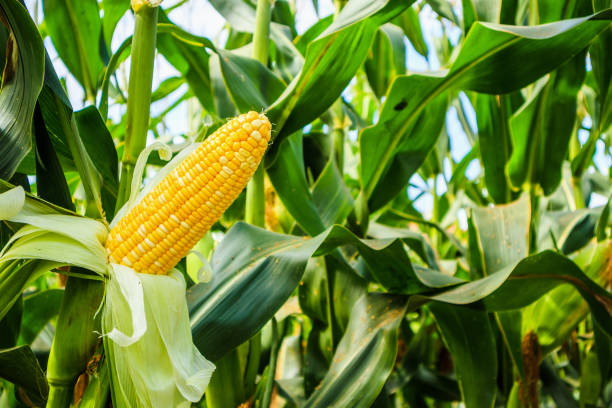
Stand at the edge of a cornfield in late summer and it looks effortless. Tall green rows, a ripening ear pushing out of its husk, the whole thing humming along like it knew what to do all by itself. It didn’t. That ear is the end of a long argument between the crop and everything you threw at it — the seed you picked, the nitrogen timing, the day you decided to plant, the rain that came or didn’t.
Corn is unforgiving that way. It’s one of the most input-intensive, timing-sensitive crops a grower can plant, and it doesn’t hand out second chances mid-season. A nitrogen shortfall during the wrong two weeks, a planting window missed by a few days, a stress event you didn’t see forming — the cob remembers all of it, and it tells you at harvest, when it’s far too late to do anything about it.
The best corn growers aren’t the ones who work the hardest. They’re the ones who decide on the best information.
The margin lives in the timing
Every corn farmer knows the big levers — hybrid selection, population, nitrogen, planting date. What’s changed is how much the precision of those calls is worth. With input costs high and weather swinging harder every year, the gap between a good decision and a slightly-too-late one is no longer rounding error. It’s yield. It’s the difference between a field that pencils out and one that doesn’t.
The trouble is that the information you need to make those calls is scattered everywhere: yield maps in one place, soil tests in a drawer, input records in a notebook, weather on your phone, agronomy advice in your head. None of it talks to each other, and none of it shows up at the moment you actually have to decide.
Where FarmOps360 fits the corn operation
That’s the problem we built FarmOps360 to solve. Not to farm for you — you already know how to do that — but to put what your own fields know in front of you, in time to act on it.
Four ways it earns its keep on corn
01
Your records, finally in one place
Yield history, soil data, hybrid performance, and input records for every field, side by side instead of scattered across drawers and apps. Last season’s lessons are right there when you’re planning this one.
02
Nitrogen and input timing you can see coming
Track applications against crop stage and field conditions so the critical windows don’t slip past unnoticed. The goal is fewer “I wish I’d caught that two weeks ago” moments at harvest.
03
Field-by-field, not whole-farm averages
Your best 40 and your worst 40 aren’t the same operation. See which fields are carrying the farm and which are quietly costing you, so input dollars go where they actually pay back.
04
Your data, your call — always
Everything you put into FarmOps360 stays yours. If there’s ever value to be had from your data, you decide whether to share it, with whom, and on what terms. Plain consent, no fine print.
None of this replaces the instinct you’ve built over years of reading your own ground. It sharpens it. The grower who walks into planting season knowing exactly how each field performed, where the nitrogen went, and what the weather is shaping up to do isn’t guessing less because they care more — they’re guessing less because they finally have it all in one place.
That ear of corn was always going to tell you the truth at harvest. FarmOps360 just helps you hear it a whole lot earlier — while you can still do something about it.
See what your fields have been trying to tell you.Explore FarmOps360FarmOps360
Smarter decisions, field by field. · Growing Season 2026